
The Congress on Wednesday expelled former Madhya Pradesh MLA Laxman Singh, who is brother of ex-chief minister Digvijaya Singh, from the primary membership of the party for six years for 'anti-party activities'.
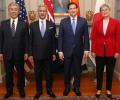
Increasing cooperation in critical minerals will top Prime Minister Modi's agenda during his discussions with leaders of Ghana, Argentinia, Brazil and Namibia.

The coast guards of India, Japan, the US and Australia have launched the first-ever "Quad-at-sea" mission to boost operational coordination and interoperability in the Indo-Pacific.

In President Donald Trump's big priority bill, there is a proposal for a 5 percent excise tax on remittance transfers that would cover more than 40 million people, including those holding green cards and H1B visas.

West Bengal Chief Minister Mamata Banerjee criticizes Delhi Police for referring to Bengali as 'Bangladeshi national language,' sparking political controversy.

'Willingness to try new drugs for obesity management have propelled the growth of this market, which today is almost five times what it was five years ago.'

Unless Donald Trump takes a major U turn, this is possibly the beginning of the end for Trumpian politics, argues Colonel Anil A Athale (retd). Unless President Trump takes a major U turn, this is possibly the 'beginning of the end' for Trumpian politics driven by TV trp's, points out Colonel Anil A Athale (retd).
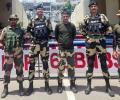
Purnam Kumar Shaw, a BSF jawan who was held captive in Pakistan for nearly three weeks, returned to his home in West Bengal's Hooghly district on Friday evening. Shaw was greeted by his family and well-wishers at Howrah station and was escorted to his hometown Rishra, where he was welcomed by people and a band playing patriotic tunes. Shaw had been taken into custody by Pakistan Rangers on April 23, after he inadvertently crossed the international border in Punjab's Ferozepur district.

The announcements were made after a meeting chaired by Prime Minister Shehbaz Sharif to formulate the country's response to India's move to suspend the Indus Water Treaty and downgrade diplomatic ties after the Pahalgam terror attack.
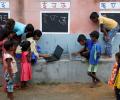
'The next decade will be even more transformative,' says Prime Minister Modi. 'We are moving from digital governance to global digital leadership.'

After effecting two back-to-back 25 basis points rate cuts, Reserve Bank Governor Sanjay Malhotra on Wednesday hinted at another reduction in key policy rate by changing the central bank's monetary stance to 'accomodative' from 'neutral', which may further lower EMIs for consumers.

'Trump has personally weighed in to overcome doubts and reservations about Pakistan among his top advisors.'

Tensions between India and Pakistan are escalating following last week's dastardly terror attack in Pahalgam that claimed 26 lives.
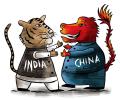
India and China have announced a series of measures aimed at improving their relationship, including maintaining peace along the border, reopening border trade, and resuming direct flights.
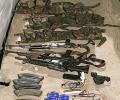
Security agencies have gathered evidence, including Pakistani government documents and biometric data, confirming that the terrorists involved in the Pahalgam attack were Pakistani nationals.
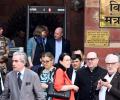
India briefed envoys of the US, UK, France, China, Russia, Germany and several other countries on the Pahalgam terror attack and its link to cross-border terrorism. Foreign Secretary Vikram Misri apprised the diplomats about various aspects of the dastardly terror attack on innocent civilians and India's firm policy of "zero tolerance" against terrorism. The briefing was held a day after India announced a raft of measures against Pakistan including expulsion of Pakistani military attaches, suspension of the Indus Water Treaty of 1960 and immediate shutting down of the Attari land-transit post. The Cabinet Committee on Security headed by Prime Minister Narendra Modi firmed up the punitive measures against Pakistan in view of the cross-border links to the Pahalgam attack that killed 26 people. Diplomats of Oman, the United Arab Emirates, Qatar, Norway, Italy, Indonesia and Malaysia were also part of the briefing. Prime Minister Narendra Modi vowed to punish terrorists behind the strike and said India's spirit will never be broken by terrorism.

The move is aimed at improving cooling efficiency, potentially reducing sudden power demand spikes, and cutting electricity bills.
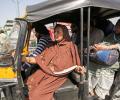
The exit deadline for Pakistani nationals visiting India on SAARC visas ended on April 26, while for the rest, except those on medical visas, it is set to close on Sunday, April 27 amid escalating tensions between the two countries over the Pahalgam terror attack that killed 26 people.
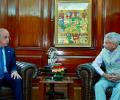
India briefed envoys of around 45 nations on the Pahalgam terror attack and its link to cross-border terrorism. The envoys were briefed in two batches by senior officials of the Ministry of External Affairs (MEA). India also announced punitive measures against Pakistan, including expulsion of Pakistani military attaches, suspension of the Indus Water Treaty of 1960 and immediate shutting down of the Attari land-transit post. Pakistan responded by shutting its airspace to all Indian airlines and suspending trade with New Delhi.

The Pakistani military fired unprovoked shots across the Line of Control (LoC) in Kashmir for a second consecutive night, triggering retaliatory action from Indian troops. This escalation follows heightened tension between India and Pakistan after the Pahalgam terror attack that killed 26 civilians. Despite the exchange of fire, no casualties were reported. India has imposed a series of punitive measures in response to the attack, including the suspension of the Indus Waters Treaty and closing the Attari land-border crossing. Pakistan has responded in kind, closing its airspace to Indian airlines and suspending trade with India.

The CCS meet was held at the prime minister's Lok Kalyan Marg residence, a day after he held a meeting with the top military brass and accorded operational freedom to the armed forces on the "mode, targets and timing" of India's response to the April 22 attack that killed 26 people.
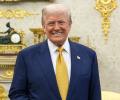
Trump, who has repeatedly said that he stopped the conflict between India and Pakistan through trade, last Friday said for the first time that "five jets were shot down" during the fighting.

There was no immediate reaction from the government on it but it has maintained that India-Pakistan understanding on cessation of hostilities was arrived at following direct negotiations between the two sides.

Main imports from the neighbouring country during April-January 2024-25 included fruits and nuts (USD 0.08 million), certain oil seeds and medicinal plants (USD 0.26 million), and organic chemicals.
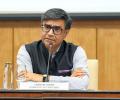
Foreign Secretary Vikram Misri, who faced trolling on social media in the wake of India and Pakistan reaching an understanding on May 10 to halt all military actions, has received support from veteran diplomat Nirupama Menon Rao, a body of Indian diplomats and a host of politicians from several parties.

'Listing of scaled Indian subsidiaries of multinational corporations as well as of Indian conglomerates continues to remain a key theme for IPOs in India.'
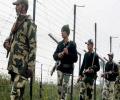
The Border Security Force (BSF) has lodged a protest with Pakistan Rangers after a BSF jawan was apprehended by the Rangers last week after he mistakenly crossed the international border in Punjab. The incident comes amid heightened tensions between India and Pakistan following the Pahalgam terror attack.
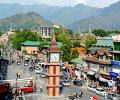
'Often people outside paint a wrong picture of us of Kashmiris. We are not like that. We are cool and bindaas,' said the lady, a teacher, caressing my cheeks in the pressing crowds.
As tensions escalated between India and Pakistan following the deadly Pahalgam terror attack, Iran reached out to both countries, urging de-escalation. Saudi Arabia also expressed concern, with its foreign minister engaging in phone conversations with his Indian and Pakistani counterparts. Iran's foreign minister, Seyed Abbas Araghchi, emphasized the importance of bilateral relations, stating Tehran's willingness to "forge greater understanding" at this critical time. Saudi Arabia's foreign minister, Faisal bin Farhan Al Saud, spoke with both India's External Affairs Minister S Jaishankar and Pakistan's Foreign Minister Mohammad Ishaq Dar. Amidst heightened tensions, India has taken a series of punitive measures against Pakistan, including suspending the Indus Waters Treaty and downgrading diplomatic ties. Pakistan responded by shutting its airspace to Indian airliners and suspending all trade. Both countries exchanged warnings, with Pakistan emphasizing its commitment to "respond firmly to any aggression."
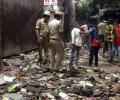
This is not the first time that a large number of people have died in stampedes at temples and other religious gatherings over the years in India.
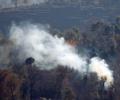
Pakistani troops continued to violate the ceasefire along the Line of Control (LoC) by resorting to unprovoked firing in Jammu and Kashmir's Poonch and Kupwara districts, army officials said. This was the fourth consecutive night that Pakistan resorted to unprovoked firing along the LoC and came amid heightened tension between New Delhi and Islamabad following last week's terror attack in Pahalgam. Indian troops responded swiftly and effectively.
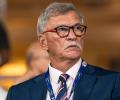
The incumbent BCCI president Roger Binny turned 70 on Saturday but there is no immediate clarity on whether he would be continuing till the AGM in September or demit office with immediate effect with vice-president Rajeev Shukla taking charge as the interim head.
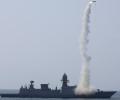
The visuals show the BrahMos anti-ship and anti-surface cruise missiles being launched from a fleet of warships, including Kolkata-class destroyers and Nilgiri and Krivak-class frigates, reaffirming the Navys operational prowess.

A new book reveals that India and Pakistan discussed a communal division of Jammu & Kashmir along the Chenab river before the Kargil war in 1999.

India's Air Chief Marshal A P Singh met Prime Minister Narendra Modi on Sunday to discuss the security situation arising from escalating tensions with Pakistan. The meeting comes after a similar briefing by the Navy Chief on the situation in the Arabian Sea. This follows a deadly terror attack in Pahalgam, which India has blamed on Pakistan. India has taken several retaliatory measures, including suspending the Indus Waters Treaty and banning imports from Pakistan.
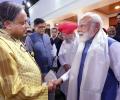
Prime Minister Narendra Modi's energy, dynamism and willingness to engage remains a 'prime asset' for India on the global stage but deserves greater backing, Congress MP Shashi Tharoor said on Monday, in remarks that are likely to irk his party and widen the growing cracks in his ties with its leadership.

Several Pakistani nationals visiting India started returning home through the Attari-Wagah land route in Amritsar on Thursday, a day after the Centre set a 48-hour deadline for them to leave the country. The decision came after India announced a raft of measures, including the expulsion of Pakistani military attaches, suspension of the Indus Water Treaty of 1960, and the immediate shutting down of the Attari land-transit post in view of the cross-border links to the horrific terror attack in Kashmir's Pahalgam that killed 26 civilians on Tuesday.

Abdullah lambasted the Lieutenant Governor and the police for trying to stop him and his entourage from entering the martyrs' graveyard.

India has suspended the Indus Waters Treaty with Pakistan, citing sustained cross-border terrorism and security concerns. The treaty, brokered by the World Bank in 1960, governs the distribution and use of the Indus river and its tributaries between the two countries. India's decision follows a recent terror attack in Jammu and Kashmir, and has been met with strong condemnation from Pakistan.

So far, most of the injured have been released. Currently, 106 people are being treated in hospitals, and another 149 are being treated in the emergency room.
